
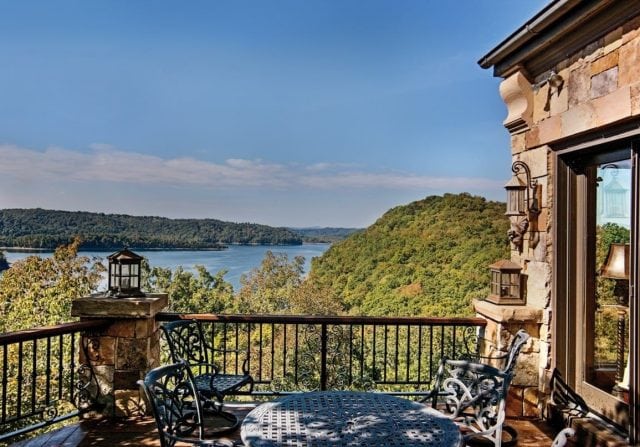
Site orientation is one of the first, and most important things you will decide when designing your dream timber frame home. So, what exactly is site orientation? Site orientation includes how your home, and its living spaces, set on the property in relation to access, privacy, views, and the path of the sun.
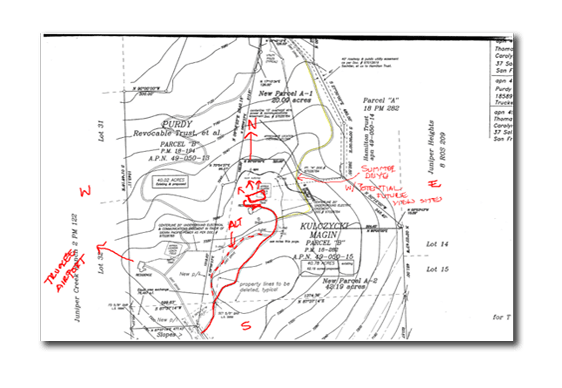
If typical, you will select the orientation of your home before defining and refining the layout. While this may seem counter-intuitive, establishing a general idea of location and views is essential prior to designing your home. Your designer, or ours, will try to get the most information possible about your site in order to select the best orientation. Helpful information includes:
- satellite pictures
- topographic maps
- photos of your property
- your interpretation of the site and how you want it to work

Your designer will also ask you questions about the four main factors related to site orientation. These factors are: access, privacy, views, and the path of the sun.
Access
How you approach your home by vehicle determines where your garage or parking spaces are located. However, if there is an existing driveway on your property, the choice may already be made for you. Prefer to park somewhere else? You will need to decide if you are willing to build a new driveway.
Privacy
If your building site is in a neighborhood, you want to avoid positioning your private areas, like bedrooms, towards the public area of a neighbor’s home, and vice versa. Building in the country surrounded by wide open spaces? You might create privacy by placing your home far from the road and also facing your great room away from it.
Views
Many future timber frame homeowners have property that overlooks a lake, river, or other body of water. If this describes your property, you’ll want to maximize the beautiful water views from as many rooms as possible. Determining a primary and a secondary view while selecting the site orientation gives you guidance in conjunction with your other desires. For example, if you want to split up your sleeping areas, you might consider aligning the secondary bedrooms with your secondary view, saving the primary view for your master suite.
Path of the Sun
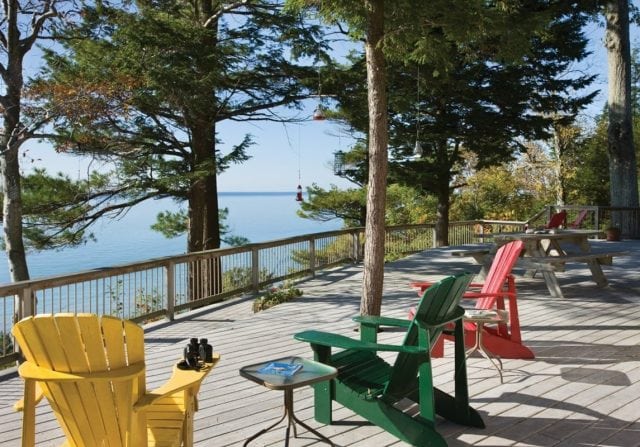
Because sunlight primarily comes from the south, moving east to west throughout the day, it heavily factors into the placement of your home. Why? Natural light.
Consider this. If your view faces north, you will still get natural light but it will be a lesser amount than a home with a south facing view. Architectural designers compensate for limited natural light coming from one direction in more than one way. They might use an open floor plan. Or, perhaps clerestory windows will be incorporated.
And remember, if you plan to put solar panels on your home, a large portion of your rooftop will need to face south.
What if Your Desires Conflict?
An example of site orientation conflict is when the best view from your home is exactly where your driveway needs to be. While it can be difficult to envision a solution on your own, experienced designers can develop a creative solution. They may suggest wrapping the driveway around your home, placing your garage on the opposite side, and thus preserving that stunning view.
Another conflict future homeowners may face is finding a plan they love that does not work with their desired site orientation. When thinking about site orientation and standard floor plans, remember that every Riverbend design can be customized to take advantage of your site. Our designers can even start your design from scratch to incorporate everything you want.
Read more about how Riverbend’s architectural designers design for your lot.