
Building a timber frame home is a highly coordinated process that begins long before construction starts. Once your vision is defined, the project moves through a series of connected phases — design, engineering, fabrication, raising, enclosure, and finishing — each requiring careful planning and collaboration.
Successful projects begin with you defining how you want to live, establishing a realistic budget, and selecting a site that works with your goals and local conditions. Your preparation, combined with working alongside an experienced design team, lays the groundwork for a smooth, well-executed timber frame project from concept through completion.
What Is a Timber Frame Home?
A timber frame home uses large posts and beams as the primary load-bearing structure. The walls act mainly as infill rather than major structural elements. Heavy timbers support the floors and roofs through continuous load paths so that interior spaces can remain open with fewer bearing walls.
Timber frame joinery relies on mortise-and-tenon connections. These connections include a rectangular hole in one piece of wood, with a tongue of the same size in another to connect the two. Hardwood pegs secure them. You may see discreet steel plates or screws where spans, seismic demands, or timber sizes call for extra reinforcement in modern projects.
Timber framing differs from stick-built construction, which uses smaller dimensional lumber at closer spacing and often requires multiple interior bearing walls to carry loads. Compared with post-and-beam, which also uses heavy timbers but mostly depends on visible metal fasteners and simpler joints, timber frames are visually appealing and elevate craftsmanship and connection detailing, since one of the architectural features is leaving the beams exposed.
Log homes, by contrast, use stacked logs that act simultaneously as walls, structure, and exterior finish, while a timber frame house can pair its structure with many different exterior wall systems and claddings.
Because the frame is structurally independent from the exterior skin, timber frame construction supports long spans, dramatic great rooms, and flexible interior layouts that can adapt over time. With appropriate detailing, moisture control, and maintenance, heavy timber framing offers long service life and can be compatible with modern performance standards for energy efficiency and structural design.
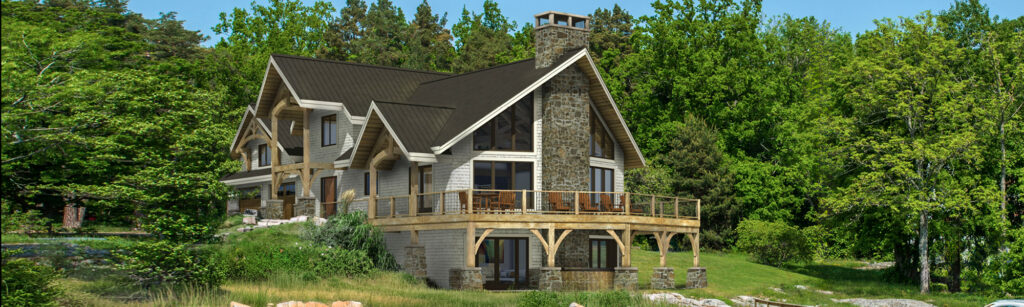
Planning: Vision, Site, and Timber Level
Before any formal timber frame design process begins, owners should document how they want to live in the home as part of the timber frame build guide. Clarify must-have spaces, including:
- Great room
- Kitchen
- Mudroom
- Home office
- Desired entertaining flow
- Porches, patios and decks
- Storage needs
- Accessibility goals
- Plans for multigenerational living or aging
The land itself significantly shapes a timber frame home plan, especially for modern timber frame homes that highlight views and natural light. Additional considerations include whether you want to incorporate solar features, how views will be experienced from inside, timber frame foundation options, and how the house should be positioned to take advantage of or block prevailing winds. Local climate factors, such as snow, wind, and seismic conditions, also influence spans, roof pitches and bracing needs.
Additionally, think through access for material delivery, staging areas, and crane placement during the timber frame raising. One of the most significant decisions is whether you want a full timber frame, a hybrid timber frame home, or a lighter timber-style approach that incorporates timber frame accents.
While full timber frame homes rely on the frame as the primary structure and showcase timbers throughout, hybrid designs combine timber frame bents, trusses, or porches with Structural Insulating Panels (SIPS) in other places to balance aesthetics and budget.
Timber-style homes incorporate decorative trusses or isolated beams to capture some character without the complexity of a complete timber frame house construction.
Assembling the Team and Defining Roles
A successful timber frame building involves several people, including the owner, an architect or residential designer, a timber frame company, a structural engineer, a general contractor, and those who provide specialty trades. Each person on the team has their responsibilities:
- The owner sets project goals, budget range, and aesthetic priorities.
- The architect or designer shapes the floor plan, massing, and elevations.
- The engineer validates structural design and code compliance.
- The timber frame partner models, engineers, and fabricates the frame.
- The general contractor coordinates all on-site work, including execution, the installation process and coordination of subcontractors.
- Trades handle enclosure, mechanical systems, and finishes.
Early collaboration is crucial in timber frame construction because spans, bracing, connection strategy, and the enclosure system, such as structural insulated panels, must align with the architecture from the outset. Riverbend Timber Framing’s in-house design team can design and fabricate the timber frame, or work with your architect to fabricate the timber frame based on your design. Review Riverbend’s design process and then discuss roles with prospective partners to understand how design, materials, and energy-efficient systems come together in a comprehensive approach.
Design and Engineering: From Concept to Shop Drawings
The next step in the timber frame design process is to create detailed, fabrication-ready documents. While the early phases focus on schematic layouts and massing, including arranging rooms, defining significant volumes, and setting roof forms, design development, including the timber frame building pattern, bay spacing, and key truss lines, becomes more defined.
During timber frame modeling and structural engineering, the team determines post and beam sizes, bent and bay layouts, bracing locations, and how each load transfers to the foundation. The team refines connection strategies, from traditional timber frame joinery to any needed concealed steel. Roof pitch, dormer, and cantilever choices influence timber sizing and cost, so this phase is where structural design and aesthetics must stay in sync.
This process also involves adjusting the timber scope and connection details so that the frame remains structurally sound, aligned with the design intent, and within budget. Simplifying truss patterns, reducing irregular roof geometry, or consolidating spans often lowers complexity without sacrificing character.
It is helpful to explore timber home floor plans to see how proven layouts handle structure and flow; take the opportunity to browse our timber frame home gallery for inspiration.
Budgeting and the Timber Frame Home Timeline
The timber frame home building steps follow a sequence, even though the durations vary by project. Design and engineering come first, culminating in engineered drawings and a signed contract for the timber frame and the structural insulated panels (SIPs). Then, the project enters fabrication, followed by shop cutting and prefit, delivery to site and timber frame raising. Then, contractors enclose and dry-in the building. The next step is the interior build-out and finishes, and finally, commissioning.
Key cost drivers include the home’s overall square footage, the chosen timber frame level, and the complexity of the frame and roof geometry. Long spans, custom truss geometry, numerous corners, and intricate rooflines add fabrication and erection time, while site access, crane requirements, and local labor rates also affect total cost.
Owners benefit from scope-based budgeting, as estimates update as the timber frame structure and related systems become refined, rather than relying on broad allowances. A realistic timber frame home timeline must allow for design development, permitting, fabrication lead times, on-site foundation work, raising, enclosure, and interior fitout, which together can span many months, depending on region and complexity.
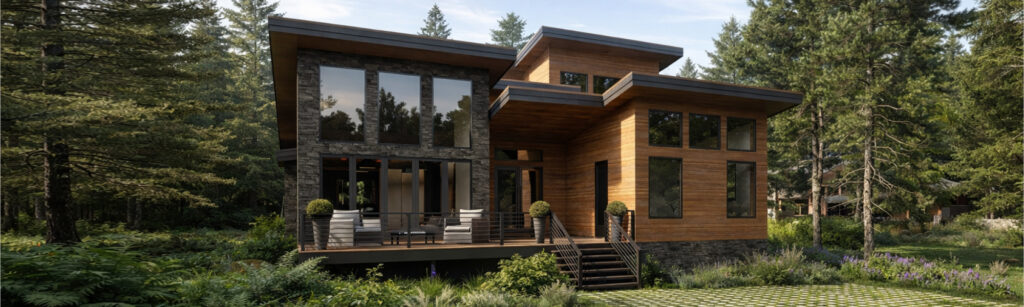
Fabrication, Delivery, and Frame Raising
The timber frame home construction process starts with selecting the timber, and cutting, planing, and machining it to the final dimensions according to the shop drawings. The fabrication team cut the mortises, tenons, housings, and other joinery, and then test-fit major assemblies such as bents and trusses prior to shipping. The shop labels each piece with a unique mark that corresponds to the installation drawings to simplify the on-site installation process.
When the timber frame delivery arrives, the receiving crew checks inventory against the packing list and inspects timbers for transit damage. They organize bents, posts, beams, and roof members near their final locations and prepare the site for crane setup where required. Thoughtful delivery logistics reduce on-site congestion and help keep the timber frame raising on schedule.
During raising, crews assemble bents on the ground, connecting posts, beams, and braces according to the plan, then lift each bent into place. Once they have several bents standing, crews use girts and purlins to tie them together. Roof framing progresses until the crews brace and complete the main timber frame structure. Weather protection and safety practices are critical during this stage, as timbers must remain plumb, square, and undamaged while the skeleton takes shape.
Enclosing the Shell: SIPs
A timber frame home becomes weather-tight once crews install the exterior shell around the structure. Structural insulated panels, factory-made units consisting of a rigid foam core laminated between structural skins, such as oriented strand board, create a strong, insulated panel that serves as the structure and enclosure.
Panels match the timber frame geometry and have openings for windows, doors, and roof features. These are pre-cut according to the drawings.
SIPs work well with timber frame homes because they enable quick dry-in, provide continuous insulation across wall and roof surfaces, and reduce thermal bridging.
Since the panels are clearly labeled, installation is straightforward. Cranes lift them into position, and crews fasten them pursuant to the engineered pattern. This installation method creates a tight, energy-efficient building envelope. This method supports timber frame insulation options that align with energy codes and green building standards.
The best timber frame construction approach depends on local timber frame code requirements, budget, builder experience, and performance goals. Riverbend frequently combines SIPs with insulated concrete forms for foundations to improve overall envelope performance.
Interior Build-Out, Finishes, and Final Walkthrough
Once the structural shell is in place and weather-tight, the interior build-out begins. Trades install mechanical rough-ins for HVAC, plumbing, and electrical systems, followed by any needed interior partition framing, then drywall, ceilings, and subfloors. Cabinetry, flooring, tile, millwork, and fixtures come later, with system start-up and commissioning near the end of the timber frame home timeline.
Exposed timbers shape interior planning and finishes. Coordinate routes for ducts, plumbing stacks, and wiring to avoid awkward soffits or conflicts with beams and braces. Protecting timber surfaces during construction by using wrap, temporary coverings, or careful staging helps prevent dents, stains, and moisture blemishes before final sanding and sealing. Choosing finishes compatible with the species and expected sunlight exposure, and planning a light maintenance regimen, supports the timbers’ appearance over time.
As the project nears completion, participate in a thorough walkthrough with the general contractor. Take note of punch-list items and confirm that systems operate as they should. If you have questions about altering or routing through structural members, consult the timber frame partner before any on-site changes. Basic timber frame home maintenance, including monitoring sealants at exterior interfaces, managing moisture, and inspecting finishes, helps preserve both performance and aesthetics.
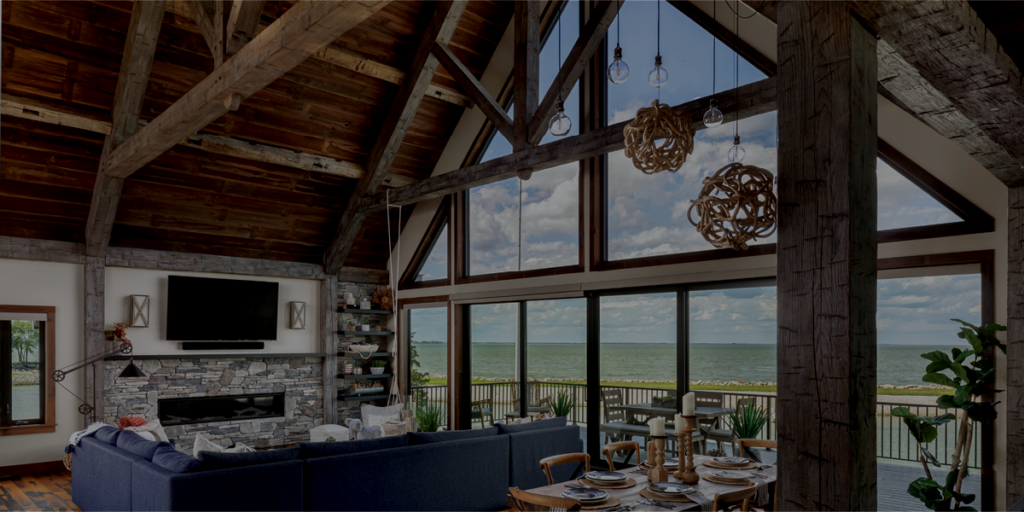
A Clear Path to Building Your Timber Frame Home: Choosing a Timber Frame Builder
The simplest way to think about how to build a timber frame home is as a linked sequence. Define your vision and site realities, choose your timber level, assemble the right team, move through design and engineering, fabricate and prefit the frame, raise it, enclose it with an appropriate shell, and then complete the interior.
Each step in this timber frame home construction process depends on clear communication and timely decisions so the project can move smoothly from one phase to the next.
The main success factor across modern timber frame homes is early coordination between the architect, engineer, builder, and timber frame partner, with a clearly documented timber frame scope and enclosure strategy before fabrication begins. This alignment supports accurate pricing, minimizes redesign, and ensures that the timber frame code requirements, structural design, and material selection all work together rather than in conflict.
Review Riverbend’s design process and see how our services and structural insulated panels packages fit your goals. Explore timber home frame floor plans and browse our gallery for inspiration. Riverbend’s team is ready to discuss with you how tailored timber solutions can support your site conditions, budget, and project timeline — from early design through construction.